Local SEO in the AI Search Era: A Complete 2026 Guide for Service Businesses
When a customer needs a plumber, contractor, clinic, legal service, college, repair company or digital agency, the search often includes a location or an immediate need. The business that appears prominently must do more than rank a webpage. It must look relevant, trustworthy, available and easy to contact.
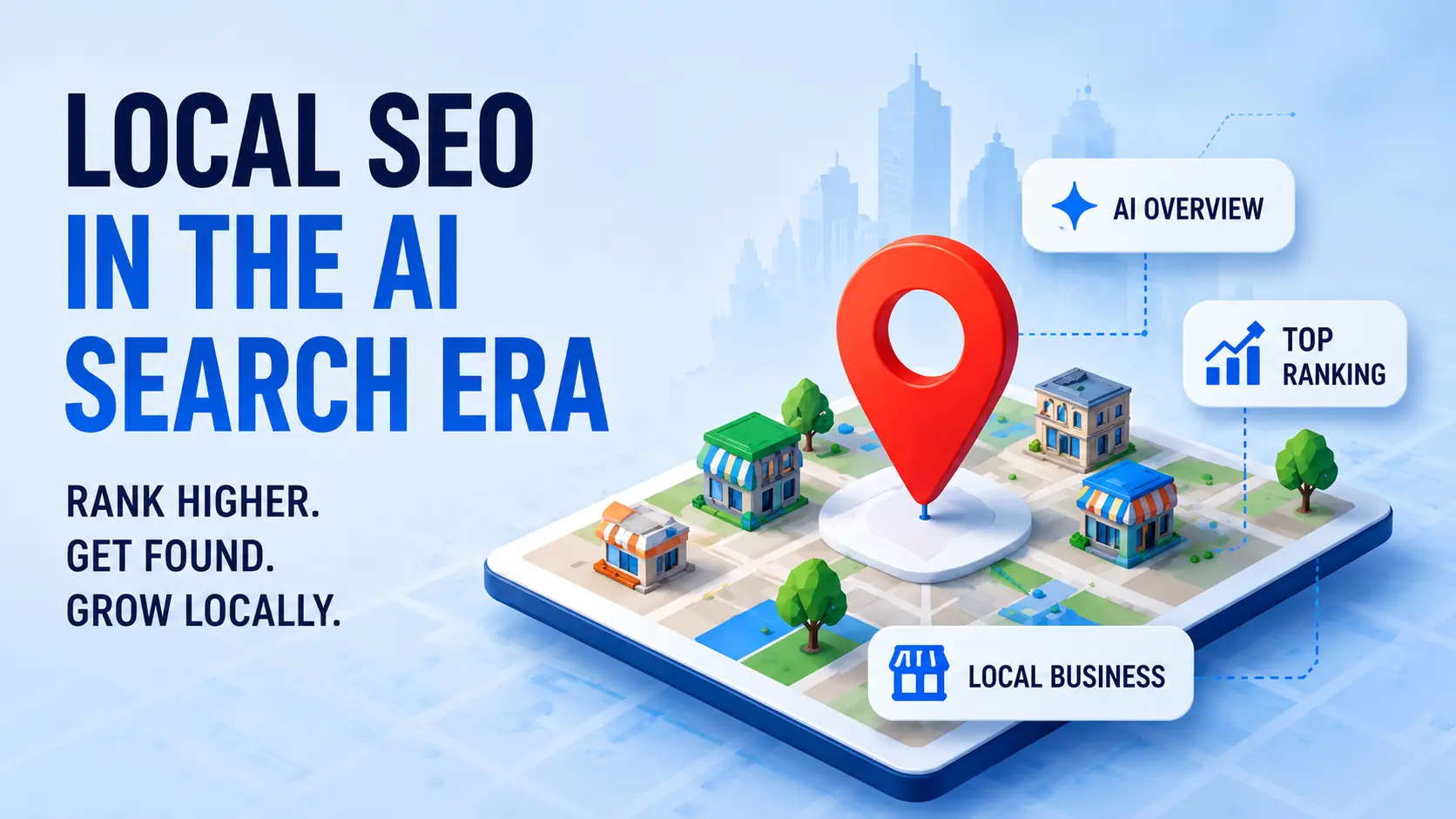
Local SEO is the process of improving visibility for location-based searches across Google Search, Google Maps and related discovery experiences. In 2026, the strategy also needs to account for AI-generated search results that summarize options and cite supporting websites.
The strongest local presence connects four assets: a complete Google Business Profile, technically sound location and service pages, authentic reputation signals and a conversion-focused website. This guide explains how to build that system.
How Local Search Works
Google explains that local results are mainly based on relevance, distance and prominence.
Relevance
Relevance reflects how well a business matches what the user is searching for. Accurate categories, services, website content and profile information help search systems understand the match.
Distance
Distance considers how far the business is from the location used in the search. This factor cannot be optimized in the same way as content. A business should represent its real location and service area accurately rather than creating misleading listings.
Prominence
Prominence reflects how well known or established a business appears. Google may consider information across the web, including links, articles, directories and reviews.
A local SEO strategy can improve relevance and prominence, but it cannot guarantee rankings for every searcher because location and competition vary.
Why AI Search Changes Local SEO
AI-generated search experiences can answer complex local questions such as:
- Which web development agency is suitable for a small e-commerce business?
- What should I ask before hiring a remodeling contractor?
- Which local college offers a particular diploma?
- How much does a website redesign cost in my city?
To appear as a useful source, a business website needs more than a homepage containing a city name. It needs detailed service information, clear expertise, location context, evidence and answers to customer questions.
Local SEO and AI search optimization therefore reinforce each other. A well-structured service page can rank conventionally, support a map listing and become a source for a generated answer.
Step 1: Optimize the Google Business Profile
Use the Real Business Name
Represent the business consistently as it appears in the real world. Do not add unnecessary keywords, city names or service lists to the business name unless they are genuinely part of the brand.
Select the Most Accurate Primary Category
The primary category should describe the main business. Add secondary categories only when they represent real services. Category selection affects how Google understands the business and which features are available.
Complete Every Relevant Field
Add the correct address or service area, phone number, website, opening hours, appointment link, services and business description. Keep holiday and special hours current.
Add High-Quality Photos
Use real photos of the location, team, completed work, equipment, products and customer experience. Avoid relying entirely on stock images. Consistent visual evidence builds trust with prospects.
Manage Reviews Responsibly
Ask genuine customers for honest feedback without incentives or manipulation. Respond professionally to positive and negative reviews. Reviews should reflect real experiences and should never be purchased.
Maintain Accurate Information
Business information changes. Review the profile monthly and update hours, services, contact details and images.
Step 2: Build Strong Service Pages
A common local SEO mistake is listing every service in a few lines on the homepage. Each commercially important service should have a dedicated page when there is enough unique information to justify it.
A strong service page includes:
- A clear service and location-focused H1
- A direct description of the problem solved
- Who the service is for
- What is included
- The process and expected timeline
- Pricing factors or a transparent estimate framework
- Relevant project examples
- Frequently asked questions
- Testimonials or proof where permitted
- A clear call, form, booking or WhatsApp action
Do not create dozens of near-identical pages by changing only the city name. Each location page must provide meaningful local value.
Step 3: Create Useful Location Pages
Location pages are appropriate when the business genuinely serves or operates in those areas. A useful page can include:
- Services available in the area
- Neighborhoods or service boundaries
- Local project examples
- Travel or response considerations
- Location-specific regulations or requirements
- Relevant customer testimonials
- Directions or appointment information
- Local FAQs
Avoid fake office pages, virtual addresses used only for rankings and duplicate content. Accuracy is essential for trust and profile compliance.
Step 4: Strengthen On-Page Local Signals
Use the language customers naturally use. Place the main service and location in the title tag, H1, introductory copy and other relevant sections without repeating it unnaturally.
Optimize:
- Title tag
- Meta description
- H1 and subheadings
- Image alt text
- Internal anchor text
- Contact information
- Footer or location details
- Service descriptions
- FAQ content
The goal is clarity, not keyword density.
Step 5: Implement Local Business Structured Data
LocalBusiness structured data can help Google understand information such as the business type, address, opening hours, telephone and other details. It should match the visible information on the website and the Google Business Profile.
Use the most specific valid business type available. Validate the markup and keep it updated. Structured data improves machine understanding but does not guarantee a rich result or higher ranking.
Step 6: Build a Local Content Strategy
Blog content should support real customer decisions, not exist only to increase page count.
High-value local topics include:
- Service cost guides for the city or region
- Permit or compliance guides
- Seasonal maintenance advice
- Comparison of service options
- Project planning checklists
- Local case studies
- Common problems observed in the area
- Questions to ask before hiring a provider
- Emergency preparation guides
- Industry changes affecting local customers
Connect each article to a relevant service page and add contextual links between related resources.
Step 7: Earn Local Authority
Prominence develops through genuine participation and recognition. Potential sources include:
- Local business associations
- Chambers of commerce
- Community organizations
- Industry directories
- Supplier and partner websites
- Local news coverage
- Sponsorships with real community relevance
- Professional memberships
- Educational or nonprofit partnerships
The objective is not to collect hundreds of low-quality directory links. Focus on accurate listings and relationships that make sense for the business.
Step 8: Maintain Consistent Business Information
Your name, address and phone information should be accurate across the website, Business Profile and important directories. Small formatting differences are usually less important than factual consistency, but outdated phone numbers or addresses create confusion.
Create a master business-information document that includes:
- Official business name
- Primary address
- Service areas
- Main phone number
- Website URL
- Hours
- Business description
- Primary and secondary categories
- Social profile links
Use it whenever creating or updating a listing.
Step 9: Improve Reviews and Reputation
Reviews influence customer decisions and can contribute to local prominence. Build a repeatable process:
- Ask after a successful customer outcome.
- Make the review link easy to access.
- Do not suggest dishonest wording.
- Respond within a reasonable time.
- Use feedback to improve operations.
- Highlight approved testimonials on relevant website pages.
Do not offer payment, discounts or gifts in exchange for positive reviews. A smaller number of genuine reviews is more sustainable than manipulated reputation signals.
Step 10: Convert Local Traffic Into Leads
Ranking without conversion produces limited business value. Local visitors often want immediate answers.
Your website should make the following information easy to find:
- What you do
- Where you operate
- When you are available
- How quickly you respond
- Why customers should trust you
- How to contact or book
Use mobile-friendly calls to action, short forms, click-to-call buttons, WhatsApp where appropriate and clear next steps. Avoid intrusive popups that block the main content.
Local SEO Website Architecture
A service business can use a structure such as:
- Home
- Services
– Service A
– Service B
– Service C
- Locations
– City A
– City B
- Projects or Case Studies
- Blog or Resources
- About
- Contact
Link service pages to relevant location pages only where useful. Link case studies to the services demonstrated. Use crawlable HTML links rather than relying only on JavaScript interactions.
Measuring Local SEO Performance
Google Business Profile Metrics
Track calls, website visits, direction requests, bookings and other available interactions. Compare trends over meaningful periods rather than reacting to daily changes.
Search Console
Review queries, pages, countries, devices, impressions, clicks, click-through rate and average position. Look for service pages receiving impressions but weak clicks, and pages ranking for irrelevant terms.
Where available, review generative AI performance data to understand which pages receive visibility in supported AI search features.
Website Analytics and CRM
Track form submissions, calls, bookings, WhatsApp actions and qualified leads. Use source and landing-page data to understand which local pages contribute to revenue.
Rank Tracking
Local rankings vary by searcher location. Use rank tracking as a directional diagnostic, not the only success metric. Leads, sales and customer quality matter more than one map-grid screenshot.
A 90-Day Local SEO Plan
Month 1: Foundation
- Audit the Google Business Profile.
- Correct categories, hours and contact details.
- Review indexing and technical issues.
- Improve the homepage and primary service pages.
- Set up conversion tracking.
- Create a review-request process.
Month 2: Content and Local Relevance
- Publish or improve dedicated service pages.
- Create one strong location page where justified.
- Publish two high-intent local articles.
- Add LocalBusiness and Article structured data.
- Improve internal links.
- Add real project photos and case studies.
Month 3: Authority and Optimization
- Correct important directory listings.
- Build local partnerships and outreach.
- Review Search Console query opportunities.
- Improve weak titles and calls to action.
- Continue collecting genuine reviews.
- Compare lead quality before and after changes.
Common Local SEO Mistakes
Keyword-Stuffing the Business Name
Adding services and cities to the profile name can violate guidelines when they are not part of the real business name.
Creating Duplicate City Pages
Changing only the location name creates weak content. Each page needs distinct, useful information.
Using Fake Addresses
Misrepresenting a location can damage trust and create profile problems. Use accurate locations and service areas.
Buying Reviews
Fake or incentivized reviews create policy and reputation risk. Build an authentic feedback process.
Ignoring the Website
A Google Business Profile is not a replacement for a strong website. The website provides detailed relevance, evidence, content and conversion paths.
Measuring Rankings Without Leads
Visibility is an intermediate metric. Track calls, bookings, qualified inquiries and revenue.
Conclusion
Local SEO in 2026 requires more than filling out a business listing. It is a coordinated system that aligns Google Business Profile information, service pages, local content, structured data, reviews, authority and conversion tracking.
AI-powered search makes this integration even more important. Businesses with specific, trustworthy and well-structured local information are better positioned to appear when customers ask complex questions and compare providers.
Focus on accuracy, usefulness and genuine reputation. Those principles create durable local visibility and a better customer experience.
Want more qualified local calls, bookings and inquiries?
Aynan Growth Lab can audit your Google Business Profile, local website architecture, service pages, technical SEO and lead-conversion system. Contact our team for a tailored local growth strategy.